


The Saugus Union School District board opened its recent meeting by celebrating empathy—handing out awards, offering polished remarks about compassion, and reminding the audience how important it is to “put yourself in someone else’s shoes.”
What followed made clear just how selectively that principle is applied.
Once public comment began, the tone shifted from ceremony to reality. Parents, teachers, and community members spoke candidly about classroom safety, student behavior, and a growing sense that those closest to the problem are no longer being heard. The emotional center of the evening did not come from the dais, but from the floor.
Natalie Epstein spoke through tears as she described the moment she learned her five-year-old son had wandered off campus and was later recovered unharmed. She spoke of the lingering fear, the daily anxiety, and the unanswered questions that followed. “I cry every day thinking about my son on the street,” she said. Her remarks were not rhetorical. They were a plea for accountability—one echoed by other parents who described similar incidents and a pattern of deflection rather than reform.
Linda Valdez, speaking on behalf of teachers, pushed back against claims that classroom behavior issues stem from educators' refusal to implement district-mandated programs. Teachers, she said, are using the required frameworks. The problem is not compliance—it is capacity. No amount of training replaces the need for consequences, staffing support, and administrative backing when classrooms are disrupted or unsafe.
The meeting also included a moment that echoed prior concerns about procedure and decorum. During public comment, parent Karen Carville referred to Superintendent Colleen Hawkins by name, without using the title “Dr.” Trustee Katherine Cooper—who was not presiding—then interjected multiple times from the dais to correct the phrasing. Under standard meeting procedures, including Robert’s Rules of Order and the district’s bylaws, enforcement of decorum during public comment rests with the chair, and interruptions are limited to genuine violations such as time or disorder. This is not the first time Cooper’s public comments have raised questions about adherence to basic meeting rules. At minimum, the conduct warrants formal review, and Carville would be justified in filing a complaint—regardless of whether district leadership acts on it.
Spoiler Alert: They won’t.
TimBen Boydston underscored that point directly. He reminded the board that these are nonpartisan positions and that leadership cannot be evaluated if people are never allowed to lead. “Every person has the ability to perhaps lead in a good way,” he said. “If they are not given that chance, then they’re not going to be able to show you. No one can do anything by themselves. They have to have a team.” Boydston knows this firsthand, having been denied the opportunity to hold the talking stick—the mayoral title—while serving on the City Council. That sentiment framed the night’s central question: whether Anna Griese would be given that chance.
Speaker after speaker made their position unmistakably clear. Teachers, union leadership, and parents spoke about trust, access, responsiveness, and the need for leadership willing to confront escalating behavior and safety issues rather than deflect them. They wanted Anna Griese as board president. The vote that followed made just as clear how little that input mattered to the majority seated behind the dais.
And then the optics finished the story.
After the vote, the district’s meeting feed captured celebratory handshakes and fist bumps with individuals who had just spoken against Griese. There was no attempt to hide it. It didn’t resemble reluctant professionalism after a difficult decision. It looked like a victory lap—reinforcing the impression that the outcome had been settled well before the meeting ever began.
What happened next only reinforced that impression.
A second video, filmed by Karen Carville on her phone, captures what happened moments later near the exit. One of the same individuals—who had just been seen fist-bumping Trunkey—approaches kindergarten teacher Ingrid Boydston and moves directly into her personal space.
Boydston did not escalate. She did not shout. Instead, she invited the individual to visit her classroom and observe instruction firsthand.
That response matters.
Boydston took offense not only on her own behalf, but on behalf of teachers who had just been publicly accused of refusing to implement district-mandated programs. She said those accusations are false. Boydston, like the teachers who work alongside her, follows the district’s required frameworks every day—often while managing extreme behaviors with inadequate administrative support. Saugus Union leadership appears more interested in arguing over who is right. Good leaders focus on what is right.
According to witnesses and the video, the exchange escalated to the point that other teachers intervened and described the conduct as “uncalled for,” particularly after the individual being filmed began personally attacking the parent recording the interaction. Rather than addressing the substance of the situation, the response shifted to familiar deflection tactics—personal accusations used to derail scrutiny rather than engage with it. This was not a disagreement over policy. It was a breakdown of professional conduct—par for the course. When someone cannot attend a school board meeting without escalating into personal confrontations, the issue is not disagreement. It is behavior.
The video above speaks for itself. One clip shows the post-vote celebration inside the chamber, with timestamps linking directly to the moment it occurs. A second clip shows what followed near the exit. Readers can watch the sequence and draw their own conclusions.
Why is this problem largely unique to Saugus Union?
Nearby districts face the same post-pandemic pressures, serve the same communities, operate under the same state mandates, and educate students growing up in the same screen-saturated culture. They use many of the same instructional and behavioral frameworks—yet they are not experiencing the same levels of classroom disruption, staff fear, or unresolved safety incidents.
Did district leadership somehow hire an entire workforce of incompetent teachers? That explanation is not credible. SUSD employs experienced, credentialed educators—many with decades of classroom experience and many who have successfully taught in other districts without these outcomes. The more plausible explanation lies elsewhere.
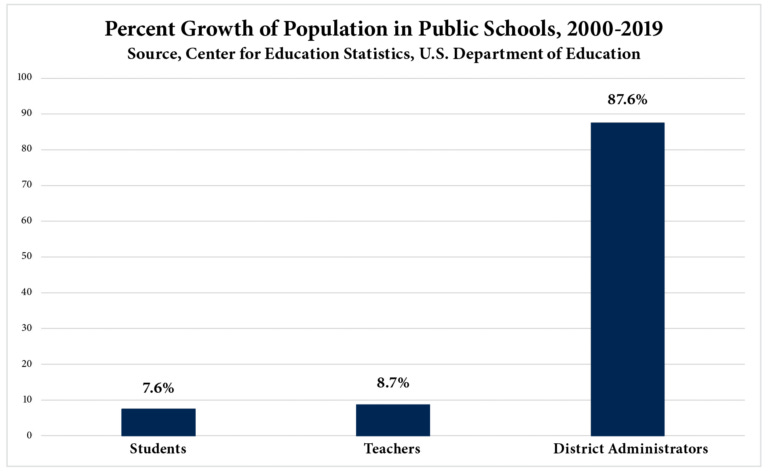
Over the past two decades, the number of school administrators has grown dramatically relative to both students and teachers, while educational outcomes have stagnated or declined. This expansion of administrative layers has not translated into better classrooms. Instead, it has increased costs, diluted accountability, and shifted responsibility away from those making instructional decisions.
What topline numbers often fail to capture is the growing administrative burden placed on teachers. These burdens represent real costs in staff time, diminished instructional capacity, and widespread burnout. Special education teachers, for example, now spend more time each week on paperwork than on grading, communicating with parents, collaborating with colleagues, and attending Individualized Education Plan meetings—combined.
When administrators need another TPS report, teaching stops—and no amount of new programming fixes that. That is not a teaching failure. It is a structural one.
At this point, a familiar deflection appears: money. When leadership runs out of answers, the problem is framed as a lack of “investment” or “commitment” by the public. This move shifts blame onto taxpayers while quietly assuming—without evidence—that more spending automatically produces better outcomes. It doesn’t, and no leadership operating with that mindset will succeed.
This is where the conversation about Saugus Union goes wrong. While my son was in SUSD, we encountered many capable, dedicated educators. The recurring failures were administrative. Decisions about discipline, placement, staffing, and consequences are made at the level above the classroom.
There are bad teachers, as there are bad professionals in any field. But the broader pattern points elsewhere. Charter schools, private schools, military schools, and homeschooling all demonstrate what is possible when expectations are clear and authority is enforced. Institutions without consequences do not reform themselves.
The answer is not endless funding increases. It is accountability—and, when necessary, real alternatives that force systems to change before families vote with their feet. Increasingly, consolidating Santa Clarita’s five school districts into one merits serious consideration to reduce unnecessary administrative costs and improve teacher efficiency.
Emotions neither prove nor disprove facts. There was a time when any rational adult understood this. But years of dumbed-down education and an overemphasis on how people feel have left too many unable—or unwilling—to separate emotional reaction from factual reality. The result is everywhere: aggressive confrontations at school board meetings, city councilmembers shouting down residents for telling inconvenient truths, and school board members interrupting public comment to make petty jabs—such as correcting titles earned long ago instead of addressing the substance of what is being said.
Empathy is not something you hand out once a year and then pat yourself on the back.
It is something you practice—especially when the people closest to the problem are brave enough to speak out. The real issue is an entire district leadership choosing to ignore their cries for help and then blaming them for the very problems they are trying to fix.
AccountableSCV will continue reporting on Saugus Union and other local governance issues that warrant public scrutiny. If you value careful, independent analysis of education policy and local decision-making, consider subscribing to support this work.